FMGE Revision Plan: How to Prioritise Topics and Revise Effectively
Neuroflip Team6 min read

The FMGE syllabus spans 19 subjects. Even after completing your notes, remembering every detail across the medical curriculum is difficult. Trying to reread everything with equal attention is not a practical revision strategy.
The better question is: Which topics should you revise first, and which mistakes should you stop repeating?
Use previous-year questions (PYQs) to identify historically tested concepts, then adjust your priorities using your own MCQ performance.
Start with the numbers
FMGE is a qualifying examination. Under the established NBEMS pattern, it has 300 MCQs, with 150 marks out of 300 required to qualify and no negative marking. Check the latest FMGE Information Bulletin for the rules applying to your sitting.
| Measure | What it means for your revision | | --- | --- | | 19 subjects | Maintain coverage, but don't give every chapter identical study time | | 300 questions | Your ability to apply concepts matters more than pages completed | | 150/300 qualifying marks | Build a margin above the threshold rather than aiming for exactly 150 | | No negative marking | Practise answering every question using elimination and sound reasoning |
For perspective, 10 percentage points more accuracy over 300 questions equals 30 additional correct answers. That is an arithmetic example, not a promised improvement. It illustrates why reviewing recurring errors can matter more than starting another full set of lectures.
You cannot revise every topic equally
You cannot realistically read, remember and repeatedly revise every detail of the MBBS syllabus with the same depth.
That does not mean skipping entire subjects. It means distinguishing between concepts you know, concepts you forget and concepts you have not understood yet.
If you consistently answer a topic correctly, a short recall check may be enough. If you repeatedly miss an important concept, it deserves a longer, targeted review.
Prioritise topics, not pages.
Use FMGE PYQs to choose the first topics
Previous-year questions show what has been tested before. Repeated concepts across separate years can help determine your starting priorities.
But PYQs are historical evidence, not a forecast of the next paper. A high-priority list should complement broad syllabus coverage, not replace it. Do not assume NEET-PG or INI-CET patterns are the same as FMGE-specific evidence.
When choosing your next topic, combine two signals:
- FMGE topic priority: how strongly available FMGE PYQ evidence supports revisiting it.
- Personal weakness: whether you forget or repeatedly answer the related MCQs incorrectly.
A repeatedly tested topic you keep getting wrong should usually move up your revision list.
Revise in milestones rather than restarting subjects
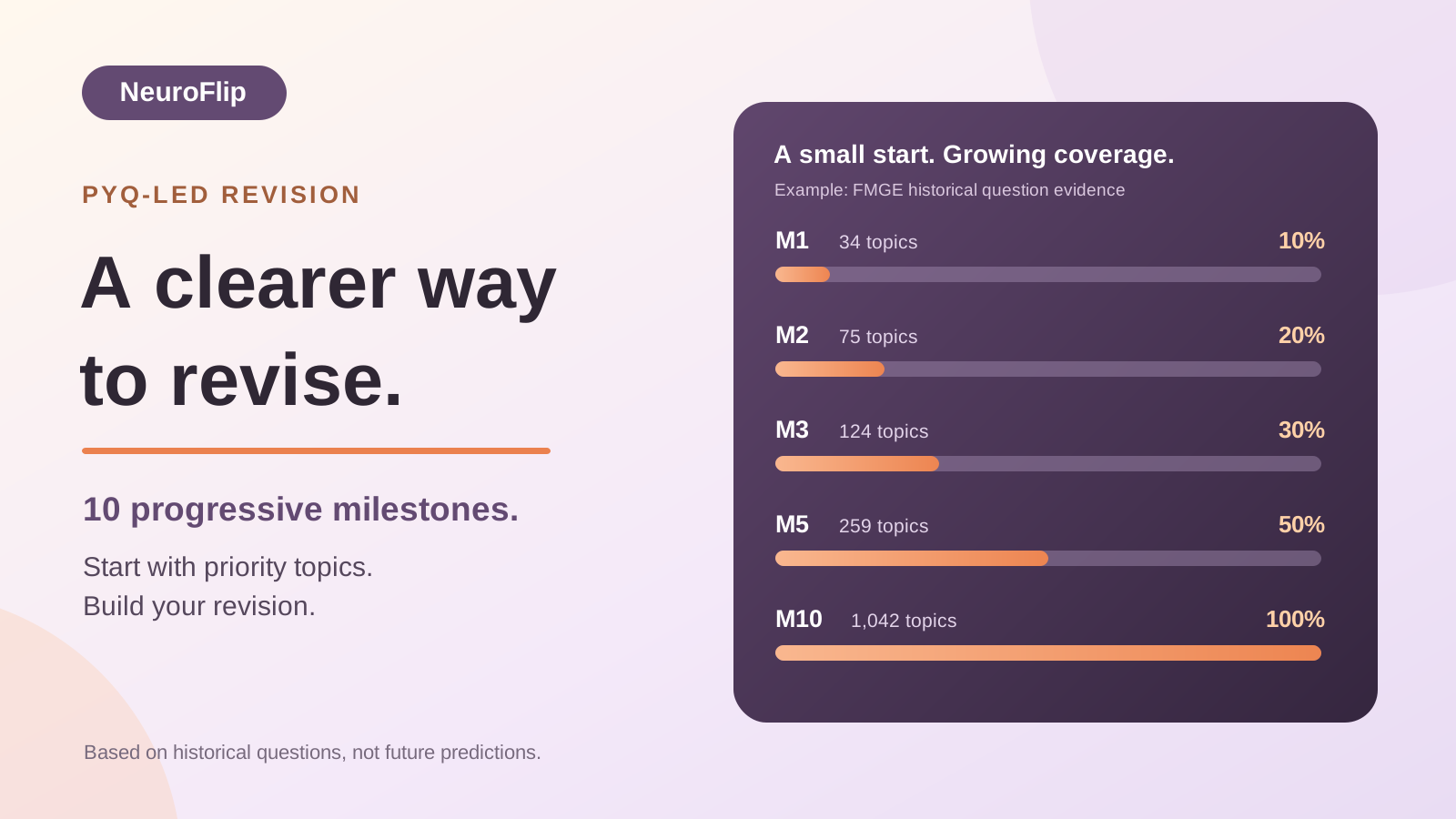
A milestone is a group of topics organised for a particular stage of revision. It is not another complete textbook to finish.
| Revision stage | Focus | | --- | --- | | Milestone 1 | Start with the highest-priority FMGE PYQ-supported topics | | Milestone 2 | Extend coverage while retesting mistakes from Milestone 1 | | Milestone 3 | Work through further priority topics and weak subjects | | Later milestones | Broaden coverage according to remaining gaps and available time | | Final review | Revisit incorrect MCQs, volatile facts, images and marked flashcards |
This is a priority order, not a prediction of question distribution. Adapt it when mock tests reveal significant weaknesses outside your current milestone.
For each topic, try recalling the key concept before opening your notes, attempt related questions, then review only what you could not explain or apply.
Let incorrect MCQs guide your next study session
Two students may both score 60 out of 100 on a practice set, yet need very different revision.
One may lack foundational knowledge. Another may know the concepts but confuse similar options or miss clinical clues.
Sort wrong and guessed answers into a few useful groups:
| Error | Next action | | --- | --- | | Didn't know the concept | Read the relevant explanation or a short section of notes | | Studied but forgot | Test recall with flashcards and repeat later | | Confused two options | Compare the distinguishing findings side by side | | Misread a stem or image | Review the missed clue and practise a similar question |
Review a selection of those errors again after a gap. A question is not fully useful until you understand why you missed it and can handle a similar one.
Keep your existing notes and question bank
If you already study with Marrow, PrepLadder, First Aid or another familiar source, you generally do not need to switch platforms now.
Use one familiar set of notes for explanations, your current question bank for practice, and a simple way to track concepts worth repeating. Open another resource when it addresses a specific gap—not simply because it contains more material.
Mock tests should also influence your priorities. After each mock, review the areas where you repeatedly lose marks before moving on.
A simple daily revision routine
- Choose a manageable set of priority topics from your current milestone.
- Try to recall key facts and distinctions before reading.
- Attempt FMGE-style MCQs and review incorrect and guessed answers.
- Return to short notes only for the identified gaps.
- Repeat difficult concepts with flashcards, then retest them later.
Keep the routine flexible. What matters is whether you are remembering and applying more concepts, not how many pages you have opened.
Try NeuroFlip for topic-focused revision
NeuroFlip organises medical revision around previous-year-tested topics and priority milestones. Use it alongside your existing question bank: practise MCQs, identify a weak concept and revisit that concept with flashcards.
You do not need another complete set of notes.
Try NeuroFlip — download the app
For a complementary flashcard routine, see FMGE Revision with Flashcards.
Frequently asked questions
Should I revise all 19 subjects equally?
Maintain broad coverage, but spend more time on important and weaker topics. Your MCQ errors help decide where additional revision will be useful.
Are FMGE PYQs enough to qualify?
No. PYQs can guide prioritisation, but wider subject coverage, explanations and mixed-question practice still matter.
Do milestones guarantee questions from particular topics?
No. Milestones organise revision based on historical evidence and priorities. They do not guarantee future questions.
Should I reread my notes or attempt more MCQs?
Use questions to locate your knowledge gaps. Return to the relevant notes for those gaps instead of routinely rereading whole chapters.
Check the latest examination notice
NBEMS scheduled an additional FMGE examination for October 31, 2026 and announced changes to the previously proposed early-2027 examination date. Dates and application rules can change, so use the official NBEMS FMGE page rather than a countdown in a revision article.
The most practical revision target is straightforward: prioritise important topics, practise applying them and return to mistakes until you can answer similar questions correctly.