NeuroFlip Milestones: A Smarter Way to Revise with PYQs
Neuroflip Team3 min read
The MBBS syllabus covers 19 subjects and thousands of concepts. Even after finishing your notes, deciding what to revise first can be difficult.
NeuroFlip Milestones give you a starting point. They organise medical topics using previous-year question (PYQ) evidence, so you can begin with a smaller set of priorities and build your revision progressively.
What is a milestone?
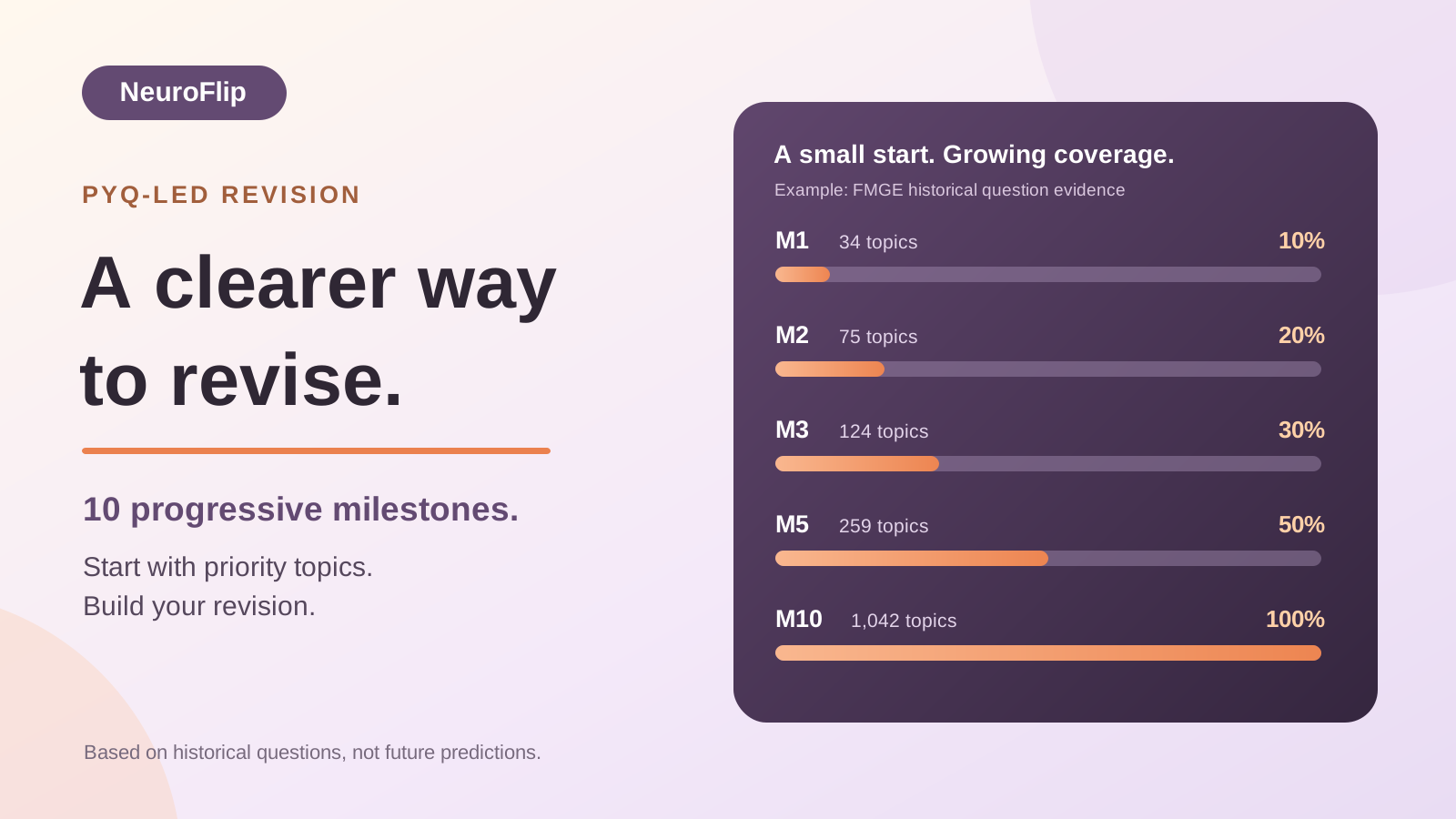
NeuroFlip divides PYQ-informed revision into 10 cumulative stages, M1 to M10. Milestone 1 starts with topics representing roughly 10% of the mapped historical question evidence. Milestone 2 expands that to roughly 20%, and so on.
These percentages describe historical PYQ coverage — not how much of the MBBS syllabus you have completed, or how many questions will appear in the next exam.
Why start with fewer topics?
A topic appearing repeatedly in past papers may deserve more of your limited revision time than one you already recall confidently. You still need broad subject coverage, but you do not need to give every topic equal attention.
For example, NeuroFlip's mapped FMGE evidence contains 2,965 historical question occurrences. The first 34 FMGE milestone topics account for 305 of them, or 10.3%.
That is a focused starting set, not a prediction of your next paper.
How does revision build across milestones?
The example below shows cumulative FMGE coverage, using NeuroFlip's governed historical PYQ mapping. Later milestones add topics; they do not replace earlier ones.
Source: NeuroFlip V3.1.1 governed FMGE milestone registry; 2,965 mapped historical question occurrences.
How are topics selected?
NeuroFlip's exam-specific PYQ signal considers how often a topic was tested, whether it recurred across years, recent question evidence and repeated tested concepts. Milestones then organise those priorities across subjects, with all 19 represented from M1.
Each exam has its own sequence, because PYQ patterns differ:
How should you use milestones?
- Start with M1 for your exam. Choose a manageable number of topics for each session.
- Recall before rereading. Use flashcards to find what you remember and what you have forgotten.
- Practise MCQs. Review wrong and guessed answers, then return to your notes only for specific gaps.
- Keep revisiting mistakes. Move to M2 and beyond while repeating weak concepts from earlier milestones.
Keep using your familiar notes and question bank. Milestones help you decide where to focus, not which resources to replace.
Does M10 mean the entire syllabus is complete?
No. M10 represents 100% of the mapped historical PYQ evidence for that exam, not every medical topic. Future papers can test other material, so use mock tests and your own weaknesses to maintain wider syllabus coverage.
The aim is simple: less time deciding what to revise, more time remembering and applying it.
Related reading: FMGE revision plan · 100 important NEET-PG topics