INI-CET 2026: 30 High-Yield Topics to Revise First
Neuroflip Team9 min read

A subject-wise list based on previous exam questions to help you plan your revision.
You cannot read and revise the entire syllabus again and again. The real question is: which topics should you revise first? Previous-year questions (PYQs) can help you decide, especially when you combine them with the topics you find difficult.
We looked at topics from previous INI-CET and older AIIMS papers to put together this list. Use it to decide what to revise first—not as a prediction of what will appear in your exam.
How did we choose these topics?
We reviewed questions from previous INI-CET exams and older AIIMS exams to identify topics that deserve extra revision. We gave more importance to INI-CET questions when deciding which topics come first.
The idea is simple: start with topics that have been important in past papers, then spend extra time on subjects and concepts you personally find difficult. No list can tell you exactly what will come in the next exam.
The top 30 INI-CET high-yield topics
Here are the 30 topics at the top of our list. They come from our review of previous INI-CET and AIIMS questions.
| No. | Topic | Subject |
|---|---|---|
| 01 | Antiepileptic Drugs | Pharmacology |
| 02 | Thoracic Trauma | Surgery |
| 03 | Cell Death | Pathology |
| 04 | Laboratory Hematology Techniques | Pathology |
| 05 | Gunshot Wounds & Range of Fire | Forensic Medicine |
| 06 | Ocular Motor Nerve and Gaze Disorders | Ophthalmology |
| 07 | Cervical Cancer Prevention & Screening | Obstetrics & Gynaecology |
| 08 | Histopathology & Cytology Techniques | Pathology |
| 09 | Skeletal-Muscle Physiology | Physiology |
| 10 | Adult Basic Life Support & CPR | Anaesthesia |
| 11 | Ketone Bodies | Biochemistry |
| 12 | Initial Trauma Assessment, Resuscitation & Scores | Surgery |
| 13 | Pharmacodynamics | Pharmacology |
| 14 | Developmental Milestones | Pediatrics |
| 15 | Immunohistochemistry & Immunophenotyping | Pathology |
| 16 | Intestinal Nematodes | Microbiology |
| 17 | Breast Cancer Treatment | Surgery |
| 18 | Neonatal Respiratory Distress & Lung Disease | Pediatrics |
| 19 | Gallbladder | Surgery |
| 20 | Age Estimation | Forensic Medicine |
| 21 | Congenital Heart Disease | Pediatrics |
| 22 | DNA Repair | Biochemistry |
| 23 | Sympathomimetics | Pharmacology |
| 24 | Pharmacokinetic Calculations | Pharmacology |
| 25 | Nutrition & Energy Requirements | Biochemistry |
| 26 | Hypertensive Disorders of Pregnancy | Obstetrics & Gynaecology |
| 27 | CNS Infection, Demyelination and Neurodegeneration | Radiology |
| 28 | Cerebrovascular Disease | Medicine |
| 29 | Coagulation Pathway Disorders | Pathology |
| 30 | Viral Hepatitis | Medicine |
On smaller screens, scroll the table sideways to see every subject.
Start with these topics, but do not limit your preparation to them. Questions can come from anywhere in the syllabus.
What should you take away from this list?
Notice that the first three topics—Antiepileptic Drugs, Thoracic Trauma and Cell Death—come from three different subjects. That is why it is useful to choose specific topics to revise, rather than spending all your time on one subject.
Some topics, such as Laboratory Hematology, Histopathology and Ocular Motor Nerve Disorders, are easier to understand when you practise with lab findings, diagrams and relevant clinical images—not just notes.
Where the first 30 topics are concentrated
Some subjects have more entries in this particular list. This is not the subject weightage of the INI-CET exam.
Counts show how many of these 30 topics belong to each subject; they do not predict marks or questions.
Subject-wise revision starting points
The top 30 is just a starting point. Here are a few more topics to consider from each subject. You do not need to study them in this exact order—give extra attention to your weak areas.
Anatomy
- Gluteal Region
- Heart & Pericardium
Physiology
- Skeletal-Muscle Physiology
- Cellular Physiology
Biochemistry
- Ketone Bodies
- DNA Repair
Pathology
- Cell Death
- Laboratory Hematology Techniques
Pharmacology
- Antiepileptic Drugs
- Pharmacodynamics
Microbiology
- Intestinal Nematodes
- Arboviruses & Hemorrhagic Fever Viruses
Forensic Medicine
- Gunshot Wounds & Range of Fire
- Age Estimation
PSM
- Principles of Immunization & Vaccination
- Principles of Epidemiology
Medicine
- Cerebrovascular Disease
- Viral Hepatitis
Surgery
- Thoracic Trauma
- Initial Trauma Assessment, Resuscitation & Scores
Obstetrics & Gynaecology
- Cervical Cancer Prevention & Screening
- Hypertensive Disorders of Pregnancy
Pediatrics
- Developmental Milestones
- Neonatal Respiratory Distress & Lung Disease
Ophthalmology
- Ocular Motor Nerve and Gaze Disorders
- Cataract Surgery, IOLs and Complications
ENT
- Hearing Physiology & Tuning-Fork Tests
Orthopedics
- Fracture Complications
Dermatology
- Skin Lesions & Morphology
Psychiatry
- Depressive Disorders
Anaesthesia
- Adult Basic Life Support & CPR
- Oxygen Therapy & Delivery Devices
Radiology
- CNS Infection, Demyelination and Neurodegeneration
These are starting points, not full subject lists. Keep revising all subjects and focus on what you find hardest to remember.
A practical PYQ-first revision method
Choose the next concept, not the longest chapter
Choose a topic you find difficult, have not revised recently, or keep getting wrong. Even if a topic is further down the list, it may need your attention first.
Attempt a relevant question before rereading
Answer without looking at the explanation. Then identify exactly which piece of knowledge was missing: the core mechanism, diagnostic reasoning, interpretation, or an easily confused distinction.
Repair the missing understanding
Use a trustworthy text or explanation for the specific gap. For example, a pharmacology question may reveal that you need to revisit a mechanism of action or a dose-calculation principle, rather than every lecture in the chapter.
Recall without notes, then return to errors
Use self-testing, brief question prompts or flashcards to retrieve the material. Revisit mistakes at intervals instead of repeatedly reading an explanation you already recognize.
Testing yourself and coming back to things you have forgotten can help you remember them. Keep using good explanations and practice questions whenever you need them.
What not to do in final INI-CET revision
Avoid reading entire subjects again without testing yourself. Don't memorize a PYQ answer without understanding why it's correct. Don't assume the same questions will repeat. Practise relevant images and investigations, and keep revising subjects you find difficult.
How NeuroFlip fits into revision
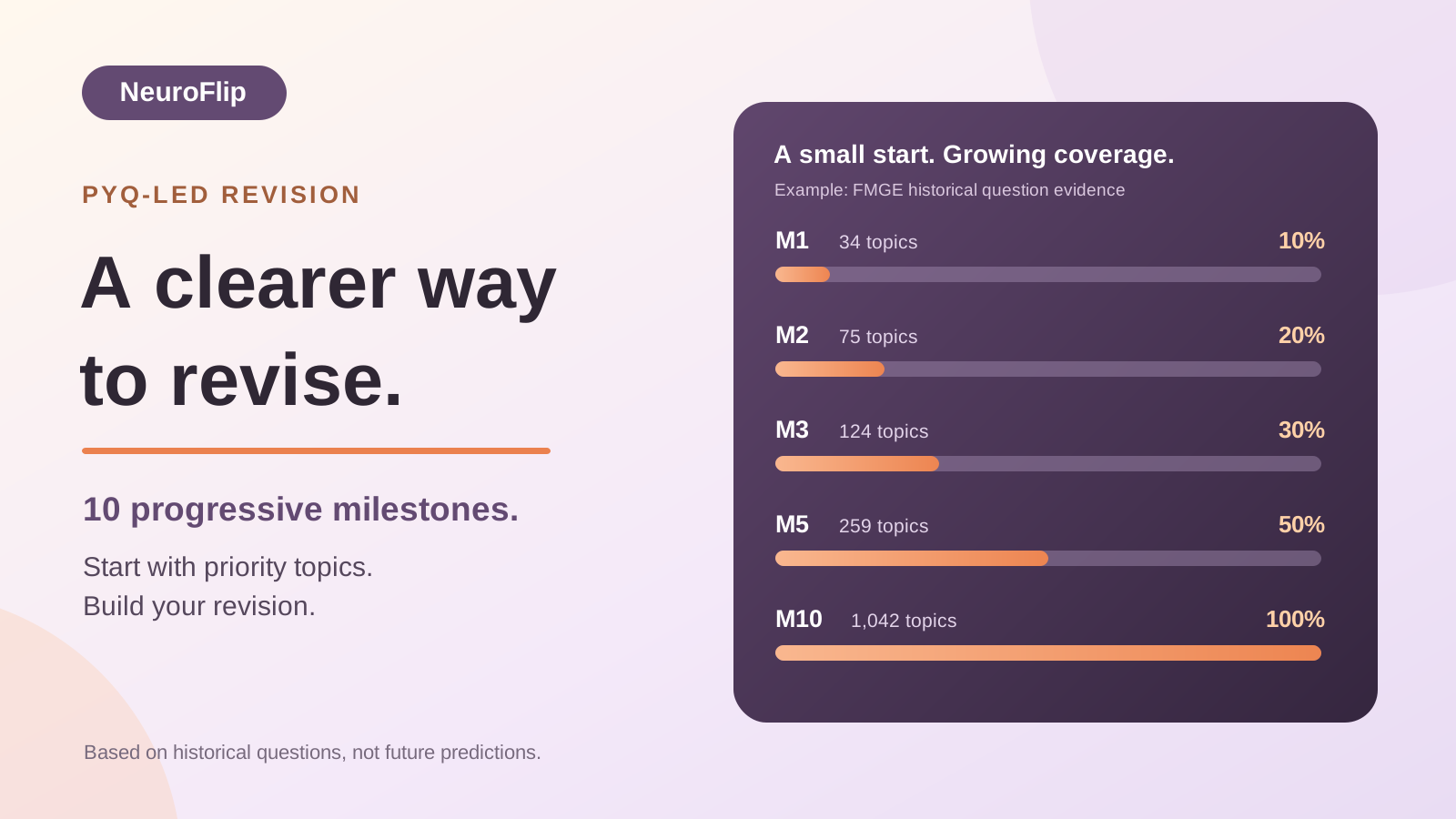
NeuroFlip is a medical revision product using flashcards, active recall and spaced repetition. It can be one way to revisit concepts you have already studied. Use it alongside appropriate explanations, PYQ practice and your personal error log.
Keep revising with active recall
Turn today's revision into better recall.
Use flashcards alongside your questions and explanations to revisit concepts you want to remember.
Frequently asked questions
Which topics should I revise first for INI-CET 2026?
Start with Antiepileptic Drugs, Thoracic Trauma and Cell Death, the first three topics on our list. Remember that past papers help guide revision but cannot predict the next exam.
Should I use older AIIMS questions to prepare for INI-CET?
Yes, older AIIMS questions can help you understand important concepts. We considered them alongside previous INI-CET questions, with more importance given to INI-CET.
Can I revise only the top 30?
No. These 30 topics are a starting point. Continue to cover the remaining subjects and your individual weaknesses; priorities guide attention but do not narrow the exam syllabus.
Does a repeated PYQ guarantee the same concept will appear again?
No. Even if a topic was asked before, the next exam may test something different.
Should I use flashcards or question banks?
Use both. Question banks help you practise exam-style questions. Flashcards help you check what you remember. Go back to a good explanation whenever you're confused.
The bottom line
You cannot revise everything equally. Start with important topics, spend more time on your weak areas, and test yourself to see what you actually remember.
Sources and further reading
About this list: We reviewed previous INI-CET and older AIIMS questions. Last reviewed in October 2026.
Official notices and examination rules: AIIMS Exams.
Research on retrieval and spaced revision: health-professions education review.
This is an independent revision guide. It is not an official AIIMS list and does not guarantee which questions will appear in your exam.